When our story begins in the late 1970s, writing was wholly analog and writers would often refer to Germany as the FRG. First there were a few fanzines from the music scene, a smattering of city magazines – DIY cut-and-paste efforts which sought out a readership up and down the country and were sold in bars. With magazines like Sounds, which was originally devoted to music alone, and later with Spex, the trend gathered steam. Soon the magazines were on newsagent shelves, where they remained for a long time with their mixture of pop writing and left-wing theory. Later, they were replaced by zeitgeisty magazines like Wiener and Tempo, which had more of a lifestyle focus, and corporate offerings like Max, Neon, and latterly the German edition of Vanity Fair. For many of the older authors, these publications were far too commercial.
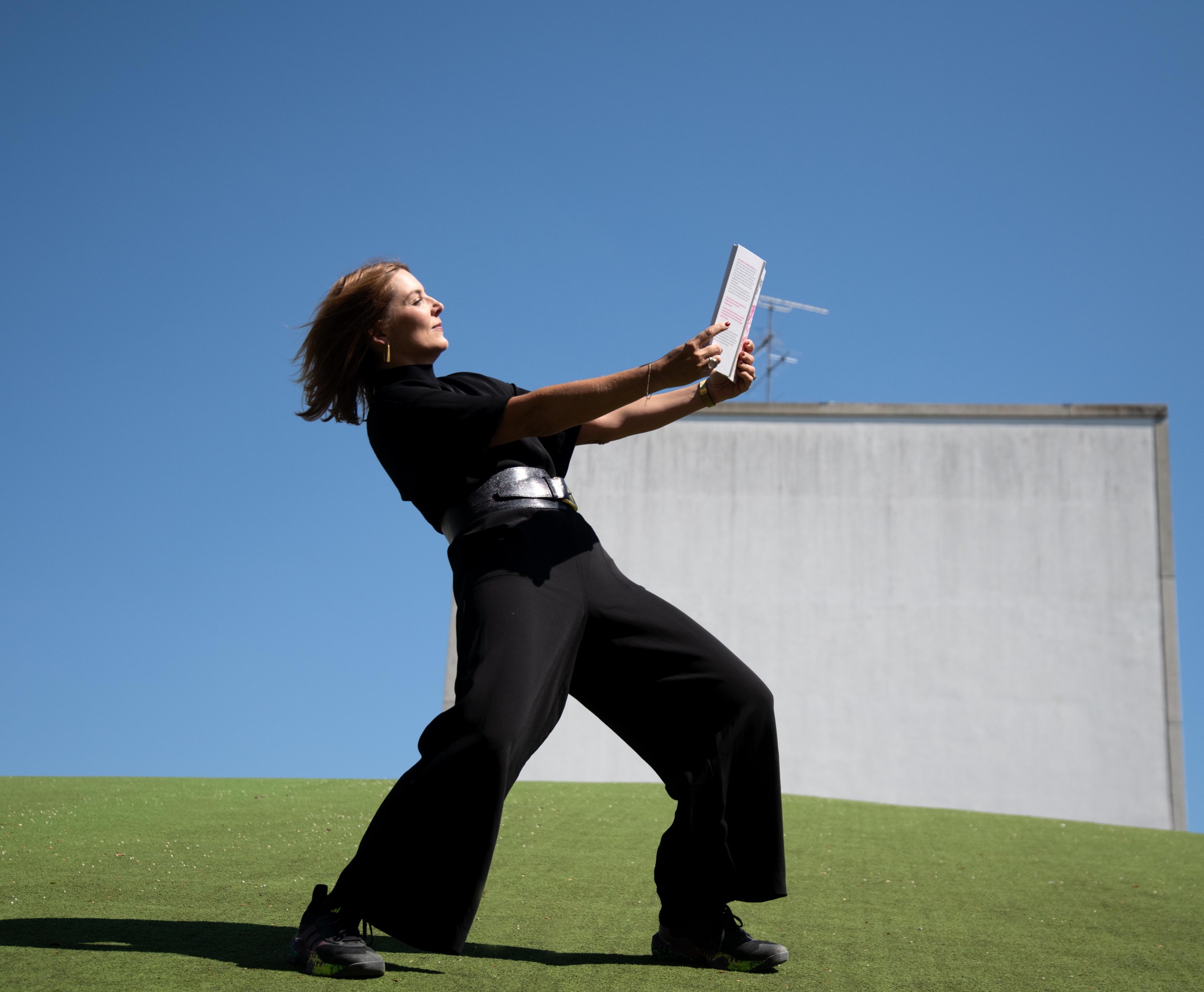
Erika Thomalla and her book "Gegenwart machen": a cocktail of self-image, structural analysis, and namedropping; of nostalgia and reflection; of hero’s journey and historical classification.
© Manu Theobald / LMU
All these magazines, and many more besides, can be classed under the general rubric of pop journalism. Not writing about pop, but writing pop – that was their maxim. In the words of Spex writer Clara Drechsler: “The text strove to be an artform in itself, analogous to what it described. The text wanted to be the statement. Or the music.” And for all the differences between the products, whether niche or broad, shoestring or splashy – their makers were united by the urge to be different: anything but the stultifying mainstream, anything but the “Augstein-Nannen establishment” as per Der Spiegel and Stern. They wanted to forge a new sound, a new form of literary journalism.
»The American New Journalism and its commitment to subjectivity was an important reference. The argument went: In the media, we only ever encounter a filtered view of the world bound to a particular perspective.«
Erika Thomalla, book studies scholar at LMU
This is how the players of yesteryear remember it. Erika Thomalla, book studies scholar at LMU, interviewed them and compiled an oral history of pop journalism from their accounts. Originally, she relates, the interviews were meant to be just background research for her habilitation dissertation on the “Era of Magazine Literature” – not least because the archives are not the greatest when it comes to pop journals.
Self-image, hero’s journey, reflection
But then this cocktail of self-image, structural analysis, and namedropping; of nostalgia and reflection; of hero’s journey and historical classification – it was all too rich to incorporate into her dissertation alone. And so Thomalla assembled the subjective statements into a compelling story via conjunctions and juxtapositions. She wrote a foreword to contextualize the information, but otherwise left it unannotated. “This is what makes oral history special, that the contributions can stand for themselves.”
Don't miss the next issue:
In this regard, the structuring principle of the oral history also reflects its object. Radical subjectivity was the guiding paradigm in pop journalism: always a first-person perspective, an eagerness to experiment, shrill at times, with a strong focus on esthetics and surface. “We took fashion and pop music just as seriously as politics and social issues, putting us at odds with the older generation. This was also due to the subjective form. We were trying to write from our own lives, eschewing the external perspective of an objective reporter,” recalls Andrian Kreye, editor-at-large at the Süddeutsche Zeitung (SZ), who was a journalist at Tempo during this period. His colleague from those days Maxim Biller, now a well-known writer of books, is blunter: “And then we came along and torpedoed their boring world of prestigious journalism with each of our crazy first-person stories.” Belligerence was part of the business model; insults were the order of the day.
And so they chipped away at this question of objectivity. “The American New Journalism and its commitment to subjectivity was an important reference. The argument went: In the media, we only ever encounter a filtered view of the world bound to a particular perspective,” explains Thomalla. “The pop journalists found it more interesting to acknowledge this up front – that is to say, to proceed as if there was no objective view of the world.”
A Trip Back in Time to the 1980s
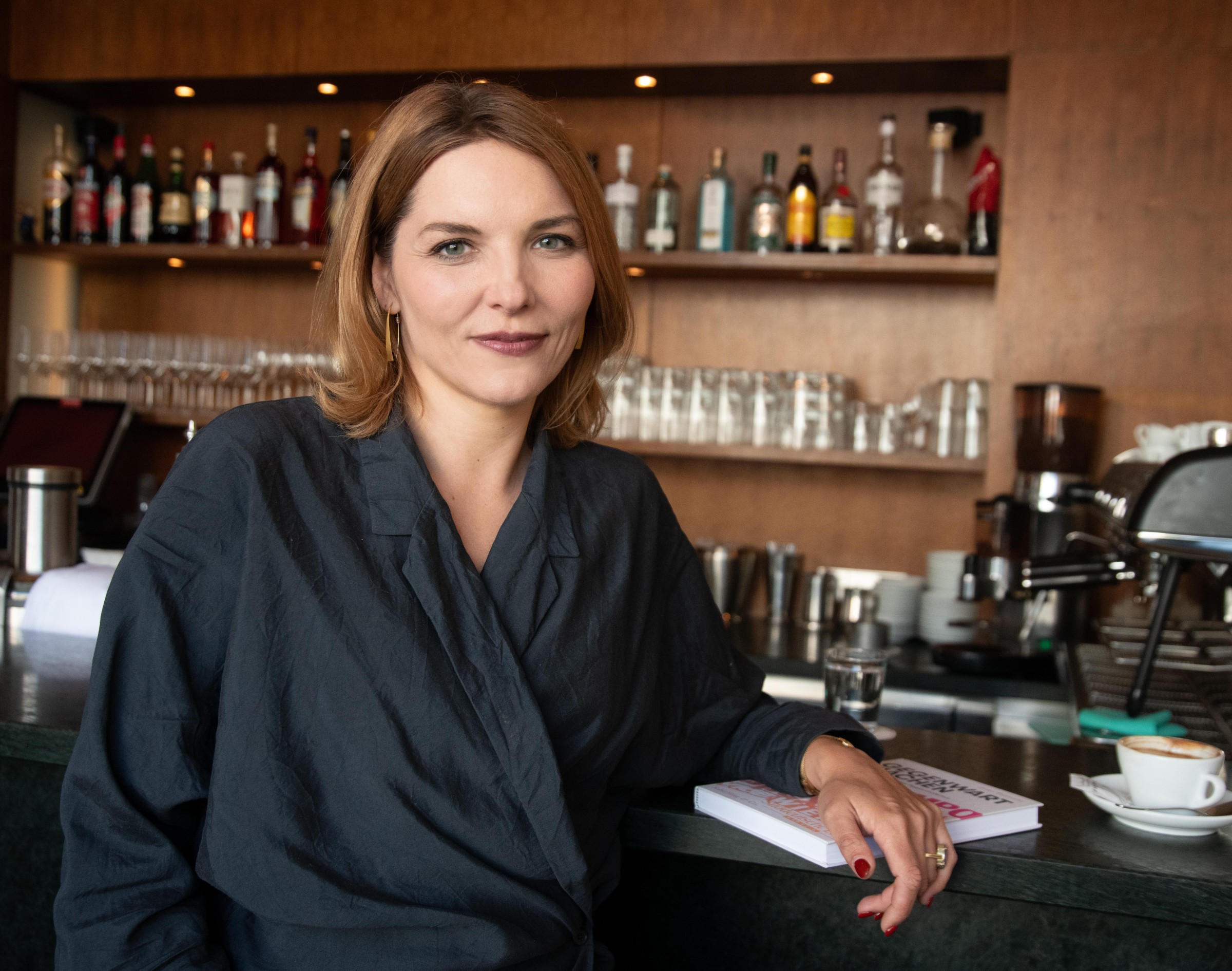
Erika Thomalla at the bar of Schumann’s, a Munich venue near the Hofgarten: The bar’s former location was a popular hangout for Munich’s pop writers.
© Manu Theobald / LMU
“Fled to literature”
The last of the pop magazines of that age have long since disappeared, while the SZ Magazine, for example, has survived as a supplement. The newspaper crisis of the late noughties and the rise of the internet and social media have turned the market upside down. Some movers and shakers – more men than women, it must be said – have made it into the upper echelons of the once deprecated media corporations. Others like Christian Kracht, Benjamin von Stuckrad-Barre, and Moritz von Uslar have “fled to literature (where we all wanted to go anyway),” as one of the players of the time notes.
But what has become of their brand of journalism? Viewing political and cultural topics “through a pop lens, with a focus on esthetics and surface” is still very common in popular formats in television, online, and in social media, says Erika Thomalla. “This is a very contemporary perspective in view of the advanced mediatization.” However, the ‘meta’ perspective is often absent, she observes, a knowing (self)-awareness possessed by some of the pop journals.
Today many users construct “their own little media worlds. Websites, Instagram accounts, TikTok, podcasts, newsletters – magazines are just one element of many,” says Christoph Amend, former editor of Jetzt magazine at the Süddeutsche Zeitung, now editorial director of Die Zeit. “I think, however, that much of what made the magazines of the 1980s and 1990s distinctive is continued in these formats.”
And the pop attitude? “Pop is everywhere now,” says Philipp Oehmke, who worked at Tempo for a time and now heads the culture department at Der Spiegel. “It no longer serves as a marker of difference.” In this mainstream incarnation, it is “no longer cool by definition.”
Erika Thomalla: Gegenwart machen. Eine Oral History des Popjournalismus (Making the Present. An Oral History of Pop Journalism) Schöffling & Co., Frankfurt am Main 2025.
More Research and Innovation:
Read more articles from LMU's research magazine in the online section and never miss an issue by activating the magazine alert!